Restaurant Online Ordering Options Compared
 By MatrisAI8 min read
Compare six options for restaurant ordering using costs, menu control, delivery setup and fit with your existing workflow.
For a small restaurant, compare ordering options by their full costs, how they handle menus and delivery, and how well they fit your existing workflow. MatrisAI is our own product, and we wrote this comparison of MatrisAI, Deonde, Toast, ChowNow, Square for Restaurants and GloriaFood.
The source-linked competitor facts below are as of 11/15/2026. The supplied sources cover limited cost details, not a complete feature comparison. A detail marked “Not published” is absent from the supplied source, not necessarily unavailable in the product.
In this article (9)
What to Compare in an Online Food Ordering and Delivery Platform
Start by deciding whether you want direct ordering, a marketplace, or both. With direct ordering, the diner places an order through a restaurant-controlled channel. A marketplace is a third-party venue where diners can browse multiple restaurants. Those are different roles: compare how each option handles the ordering experience, and do not assume that one replaces the other.
Use the same checklist for every option
- Costs: Write down subscription charges, per-order commissions and payment-processing fees separately. A low figure in one category does not establish the total cost.
- Existing tools: Ask whether the ordering option fits the restaurant’s current register, kitchen routine and record-keeping. Confirm compatibility rather than assuming it.
- Brand and menu: Check how the ordering page presents the restaurant, how menu changes are made and whether photos, prices and allergen information can be maintained.
- Order handling: Map the steps from order submission to preparation and handoff. Check whether pickup, delivery and orders scheduled for later fit the service routine.
- Data access: Ask what order and customer information the business can see, keep or export. Do not assume that access is the same across options.
- Delivery control: Clarify how the delivery area is set and what tools help staff manage delivery orders.
Apply the same two criteria to every product: documented costs and fit with your service workflow. The table summarizes the available cost evidence. Each product section then identifies a possible reader fit and the workflow details to verify. The supplied competitor sources do not establish menu control, pickup, delivery or kitchen workflow, so those features cannot be compared here.
| Product | Documented cost evidence |
|---|---|
| MatrisAI | Every plan starts with a free trial before the first payment. No card is required to sign up or start the trial. |
| Deonde | The cited page lists a monthly starting price (source, as of 11/15/2026). |
| Toast | The cited page describes Toast Direct Ordering as commission-free on direct orders (source, as of 11/15/2026). |
| ChowNow | The cited page describes ChowNow as commission-free (source, as of 11/15/2026). |
| Square for Restaurants | The cited page states there is no additional commission, only a payment-processing fee (source, as of 11/15/2026). |
| GloriaFood | The cited page describes the core system as free (source, as of 11/15/2026). |
MatrisAI
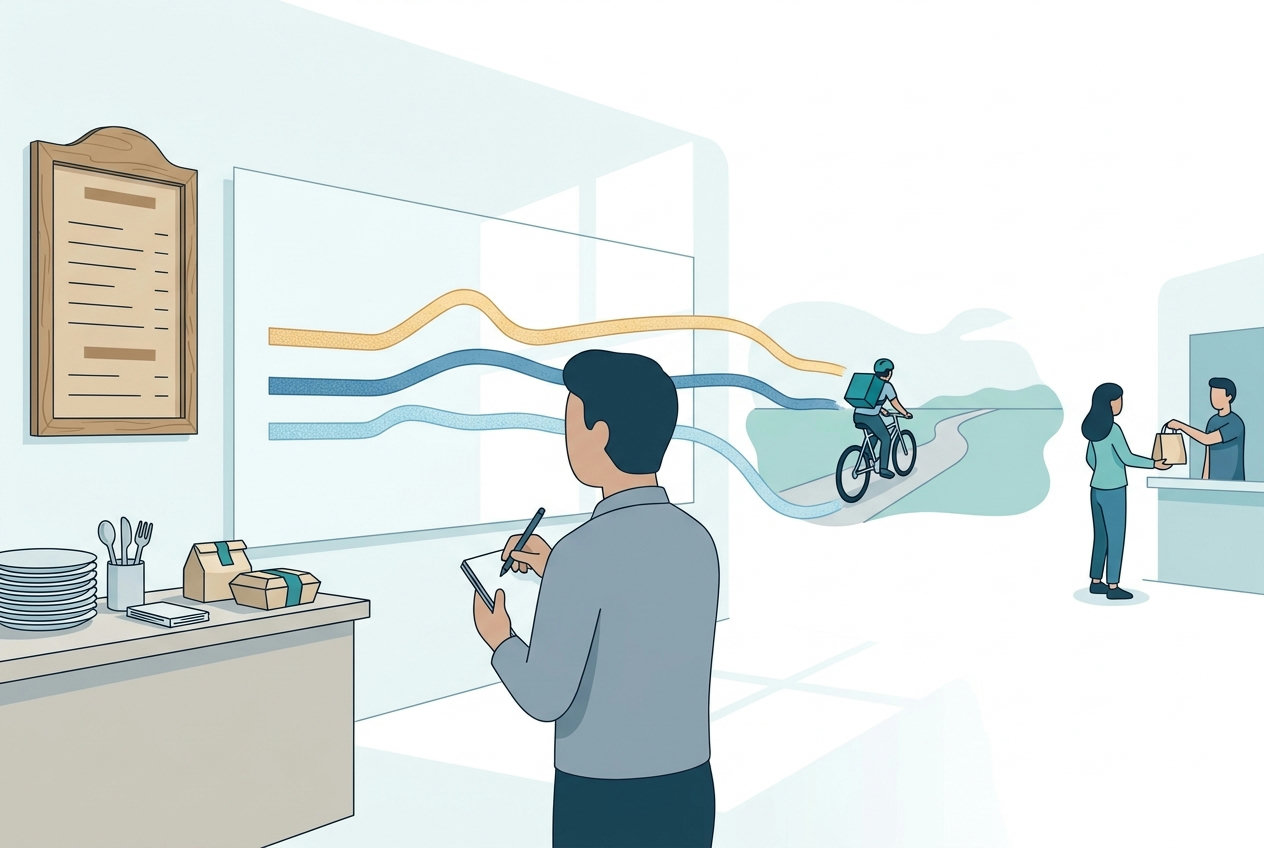
MatrisAI is an option for restaurant owners who want an online menu with ordering for pickup or delivery in an area they set. Guests can order now or for later. The menu can show dish photos, prices and allergens, and the restaurant can mark a dish sold out so the site stops taking orders for it.
Card payments go to the restaurant’s own payment account, which pays out to its bank. When the restaurant allows it, customers can pay online by card or pay on pickup or delivery. Orders appear on a kitchen screen in the admin, with statuses from new to ready. A restaurant can also switch on table reservations; guests see times allowed by the restaurant’s seats and opening hours. Reservations made by phone or at the door go into the same list and count against the seats.
Pros
- Menu entries can include photos, prices and allergen details.
- Pickup, local delivery and later ordering are supported.
- Phone and walk-in reservations can share the reservation list.
Cons
- The restaurant needs to set its delivery area.
- Reservations are optional and must be switched on if wanted.
How to get started with MatrisAI
- Describe the restaurant in your own words so MatrisAI can build the site from that description.
- Start working in the admin while the design is being finished.
- Set up the online menu with dish photos, prices and allergens.
- Choose whether to offer pickup, delivery in your chosen area, or table reservations.
- Use the admin afterwards to change the site’s text, photos and look.
Every plan starts with a free trial before the first payment, and no card is required to sign up or start the trial. The business can use its own domain on every plan, and a plan can be cancelled at any time from the billing page. See MatrisAI pricing details for the available plan information.
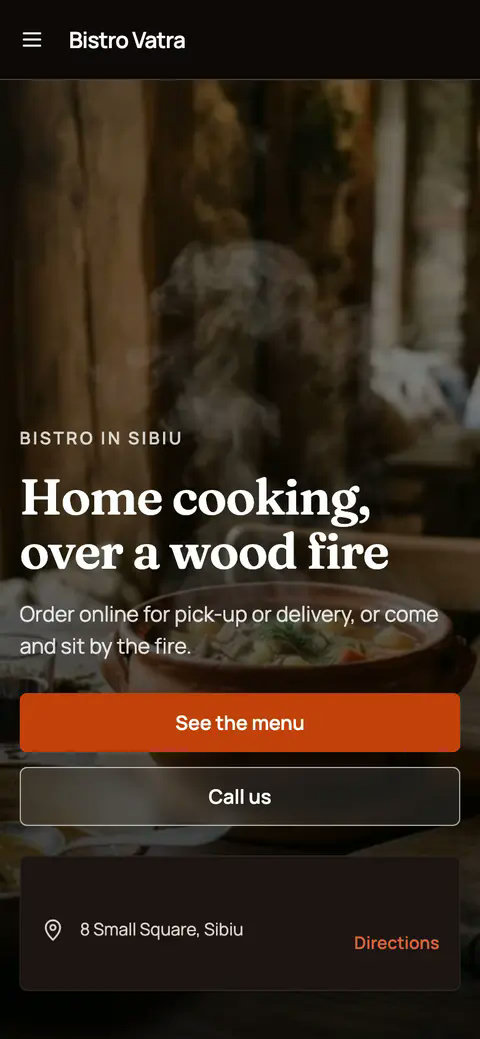
Deonde
Deonde may suit you better if a published monthly starting price is an initial screening criterion: the cited page lists one (source, as of 11/15/2026). A starting price alone does not establish total cost.
Workflow details: Not published in the supplied source.
Cost check
- Separate subscription charges, commissions and payment-processing fees in your estimate.
Workflow check
- Test menu edits, pickup, delivery and order handling against your restaurant’s routine.
Toast
Toast may suit you better if avoiding commission on direct orders is a priority: the cited page describes Toast Direct Ordering as commission-free on those orders (source, as of 11/15/2026). Commission alone does not establish total cost.
Workflow details: Not published in the supplied source.
Cost check
- Separate subscription charges, commissions and payment-processing fees in your estimate.
Workflow check
- Test menu edits, pickup, delivery and order handling against your restaurant’s routine.
ChowNow
ChowNow may suit you better if avoiding commission is a priority: the cited page describes it as commission-free (source, as of 11/15/2026). Commission alone does not establish total cost.
Workflow details: Not published in the supplied source.
Cost check
- Separate subscription charges, commissions and payment-processing fees in your estimate.
Workflow check
- Test menu edits, pickup, delivery and order handling against your restaurant’s routine.
Square for Restaurants
Square for Restaurants may suit you better if you are looking for no additional commission while accounting separately for payment processing: the cited page states that only a payment-processing fee applies, with no additional commission (source, as of 11/15/2026). This fee statement is not a complete cost estimate.
Workflow details: Not published in the supplied source.
Cost check
- Separate subscription charges, commissions and payment-processing fees in your estimate.
Workflow check
- Test menu edits, pickup, delivery and order handling against your restaurant’s routine.
GloriaFood
GloriaFood may suit you better if a free core system is a priority: the cited page describes its core system as free (source, as of 11/15/2026). That description does not establish the total cost for your restaurant.
Workflow details: Not published in the supplied source.
Cost check
- Separate subscription charges, commissions and payment-processing fees in your estimate.
Workflow check
- Test menu edits, pickup, delivery and order handling against your restaurant’s routine.

How to Choose the Right Platform for Your Restaurant
Choose based on the restaurant’s actual order pattern, delivery coverage, budget and existing systems. A restaurant with a small pickup menu may prioritize a simple menu update routine, while a business offering delivery may need to understand how its delivery area and handoff process are handled. These are needs to test, not assumptions about what a product can do.
Build a realistic cost comparison
- Write down the order volume and average order value you expect in a typical period.
- List recurring subscription costs separately from per-order commissions and payment-processing fees.
- Add any optional items or services only when you have confirmed their price and relevance.
- Compare the resulting cost picture with the time and workflow changes the option would require.
Test the ordering experience
Walk through a real menu from the diner’s point of view. Check how a dish is presented, how a sold-out item is handled, what information appears before checkout and how pickup or delivery choices are shown. Then follow the order from submission through preparation and handoff with the staff who would use that process.
Before committing, ask how the restaurant can access its menu, order history and relevant customer information. Confirm whether those records can be exported if the business changes its setup later. Also clarify which team members need access and how the restaurant will keep menu and availability details current.
For a direct-ordering option, prioritize control over the restaurant’s menu and ordering routine. If diner discovery through a third-party marketplace matters more, weigh that role separately rather than assuming a direct-ordering tool provides it. A combination can also be considered if it fits the restaurant’s budget and staff capacity.
The useful choice is the one whose documented terms and tested workflow match the way your restaurant serves orders. Where a feature, fee or integration has not been established, leave it off the comparison until you have verified it.
Online Ordering Platform Questions
What’s the most used food delivery app?
This comparison does not establish usage rankings. For this decision, focus on the ordering route, total costs and service workflow your restaurant needs.
What is a restaurant ordering system called?
It may be described as an online ordering system or restaurant ordering platform. The label alone does not tell you its costs or capabilities.
What is the best software for restaurant ordering?
There is no single fit for every restaurant. Compare fees, menu control, delivery setup and compatibility with your existing workflow.
What is the 30/30/30 rule for restaurants?
This guide does not establish a definition for that rule. Do not use it as a selection criterion unless you have a clear, relevant source.
Your restaurant, online in a few minutes.
Tell us its name. We do the rest.
3 days free, then from €10 a month. Cancel any time.
Related articles
Email Marketing for Restaurants: A Practical Guide
Build a permission-based restaurant email list, plan useful campaigns, and choose tools around your actual workflow.
Medical Scheduling Software: Compare Five Options
Compare medical scheduling software by workflow needs, verified product details, and what to test before choosing.
How to Build a Website for a Restaurant: A Step-by-Step Guide
Plan a restaurant website around guests’ needs, then work through the menu, ordering, local details, testing, and updates in a practical order.