Online Food Ordering for Restaurants: 7 Options Compared
 By MatrisAI7 min read
Explore seven restaurant ordering options. Melbourne vendor-presence figures are a research starting point, not a measure of performance.
When choosing online food ordering for restaurants, first decide whether you need your own ordering channel, a marketplace storefront, or both. MatrisAI is our own product, and we wrote this comparison; the Melbourne figures below describe tracked vendor presence, not orders or quality.
In this article (10)
How to compare online food ordering systems for restaurants
A restaurant’s own ordering channel gives guests a way to order from that restaurant’s menu. A marketplace storefront is a separate channel where guests can find a restaurant among other listings. The brief’s Melbourne data lists vendors, but it does not establish how any listed option works or what a particular restaurant will pay.
Use the same checks for every option: what channel it provides, how orders and menu changes fit your daily workflow, what guests can do during checkout, and which costs or operating limits need confirmation. The table records only the available Melbourne vendor-presence evidence. Its percentages are shares of vendors tracked, as of 2026-11-22, not shares of restaurant orders.
| Product | May suit |
|---|---|
| Square Online | Owners comparing tracked Melbourne vendors: 25% reported by Dashmote, as of 2026-11-22. |
| DoorDash Storefront | Owners comparing tracked Melbourne vendors: 11% reported by Dashmote, as of 2026-11-22. |
| TuckerFox | Owners comparing tracked Melbourne vendors: 10% reported by Dashmote, as of 2026-11-22. |
| Nextorder | Owners comparing tracked Melbourne vendors: 9% reported by Dashmote, as of 2026-11-22. |
| Foodhub | Owners comparing tracked Melbourne vendors: 8% reported by Dashmote, as of 2026-11-22. |
| Redcat Online Ordering | Owners comparing tracked Melbourne vendors: 7% reported by Dashmote, as of 2026-11-22. |
| MatrisAI | Restaurants wanting online menu orders for pickup or local delivery, with optional table reservations. |
The available Melbourne market data reports vendor presence. It is not an order count, a measure of customer preference, or a quality ranking. Treat it as one research clue, then compare providers against your own service and operating needs.

Square Online
For an owner comparing vendors tracked in Melbourne, Square Online has a reported presence in the Dashmote data. That can help with shortlisting research, but it does not establish whether the option fits a particular restaurant’s workflow.
DoorDash Storefront
DoorDash Storefront is another name in the Melbourne vendor-presence data. It may suit an owner who wants to investigate a tracked option, while checking directly whether its channel and operating requirements match the restaurant’s needs.
TuckerFox
TuckerFox appears in the tracked Melbourne vendor data. For an owner shortlisting it, the useful next step is to confirm its ordering channel and day-to-day fit with the provider; the market observation alone cannot answer those questions.
Nextorder
Nextorder is included in the same Melbourne vendor data. It may be worth researching if you are comparing the options recorded there; assess its channel and fit using current information from the provider.
Foodhub
Foodhub is also present in the tracked Melbourne vendor list. An owner may include it in a shortlist based on that evidence, then establish directly whether its ordering channel and operating requirements suit the restaurant.
Redcat Online Ordering
Redcat Online Ordering rounds out the six options named in the Melbourne data. It may suit an owner researching the tracked set, but the presence figure cannot tell you whether its ordering process matches your menu and service pattern.
MatrisAI
MatrisAI is our product for restaurants and cafes. The owner describes the business in their own words, and MatrisAI builds the site from that description. The menu can show dish photos, prices and allergens. Guests can order for pickup or delivery in an area the restaurant sets, now or for later.
Orders appear on a kitchen screen in the admin, where the restaurant can track them from new to ready. Guests can pay by card online, or on pickup or delivery when the restaurant allows it. A restaurant can also switch on table reservations: guests see times permitted by opening hours and available seats. Phone and walk-in reservations can be added to the same list and count against seats.
MatrisAI may suit an owner who wants a restaurant site with menu ordering and optional table reservations in one setup. Owners who need a marketplace storefront or specific operating requirements should verify those needs before choosing; the supplied MatrisAI facts do not establish those capabilities.
Pros
- Menu listings can include photos, prices and dish allergens.
- Pickup and area-based delivery orders can be scheduled for now or later.
- Table reservations can share seat availability with phone and walk-in bookings.
Cons
- MatrisAI is our own product, so compare its stated capabilities against your requirements rather than treating this article as an independent endorsement.
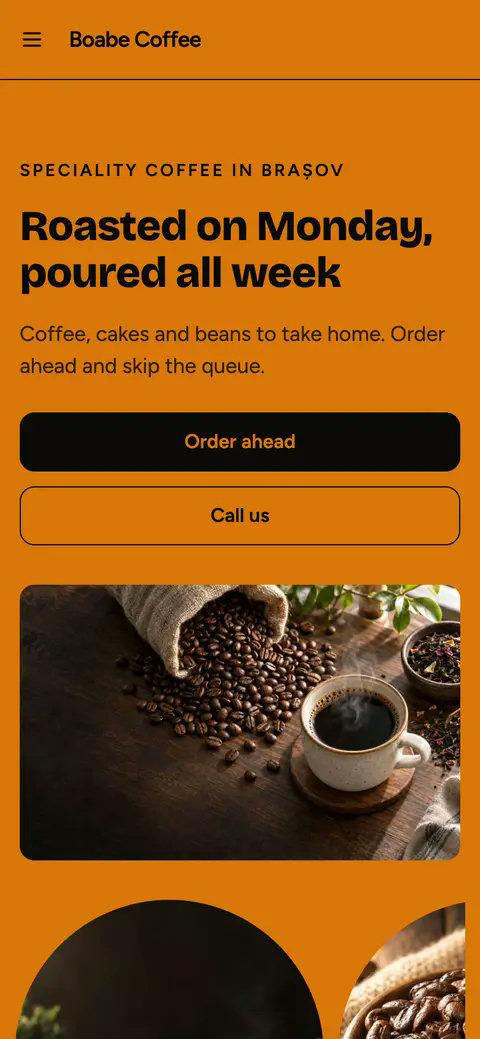
Here is a real MatrisAI demo restaurant site shown on a phone. It gives you a concrete example of a restaurant site created with MatrisAI.
How to choose the right restaurant ordering software
Start by deciding what role online ordering should play. If you want guests to order from your own restaurant channel, compare that experience with a marketplace storefront. If you are considering both, ask each provider how the arrangements work together; the information in this comparison does not establish compatibility for the named options.
Then compare practical details using the same questions for every provider. Ask for current pricing and any transaction or delivery fees. Confirm what is included, any order or menu limits, contract terms, required hardware and compatibility with your existing setup. Do not treat vendor-presence figures as a substitute for those checks.
- List the ordering channels your restaurant wants to offer.
- Map how a menu change, a sold-out item and a new order should be handled during service.
- Ask each provider about costs, limits and operational requirements that apply to your setup.
- Compare the guest ordering steps and the staff workflow using the same scenarios.
- Choose based on your restaurant’s needs, not a vendor-presence percentage alone.
For MatrisAI, a practical way to evaluate the setup is to describe your restaurant, then review the site it builds. You can start working in the admin while the design is being finished. Afterwards, you can change the site’s text, photos and look, set up menu items and decide whether to enable reservations. A dish can be marked sold out, which stops the site taking orders for it. Every plan starts with a free trial before the first payment, and no card is needed to sign up or start the trial. See MatrisAI pricing information for plan details.
- Does the ordering channel match how your guests want to order?
- Can staff manage menu availability and incoming orders in a workable routine?
- Have you confirmed current fees, limits, hardware needs and contract terms?
- Does the guest experience suit pickup, local delivery, reservations, or the mix you need?
Restaurant online ordering questions
What should a restaurant compare when choosing online ordering software?
Compare the ordering channel, guest ordering steps, staff workflow, current fees, limits, contract terms and operating requirements.
What is the difference between direct online ordering and a marketplace storefront?
Direct ordering gives guests an ordering channel for your restaurant. A marketplace storefront is a separate channel where guests can find a restaurant among other listings.
Can a restaurant use its own online ordering system alongside a marketplace storefront?
That depends on the providers and the restaurant’s setup. Confirm compatibility and operating requirements directly.
What fees should restaurants check before choosing an online ordering platform?
Ask about current pricing, transaction fees, delivery fees and any other charges that apply to your setup.
Which online ordering vendors are used by restaurants in Melbourne?
Dashmote reports tracked vendor-presence shares for Square Online, DoorDash Storefront, TuckerFox, Nextorder, Foodhub and Redcat Online Ordering, as of 2026-11-22. The figures do not show order volume or quality.
Your restaurant, online in a few minutes.
Tell us its name. We do the rest.
3 days free, then from €10 a month. Cancel any time.
Related articles
How to Choose an Online Booking System for a Small Business
Compare booking software by services, team schedules, payments, and customer experience. Use this checklist to plan your online appointments.
Scheduling Software for Service Businesses: 7 Options
Compare appointment booking, field-job dispatch, and staff scheduling needs before choosing a tool for your service business.
How to Make a Portfolio Website: A Practical Guide
Plan your portfolio, choose what to show and work through a practical build and launch checklist.